
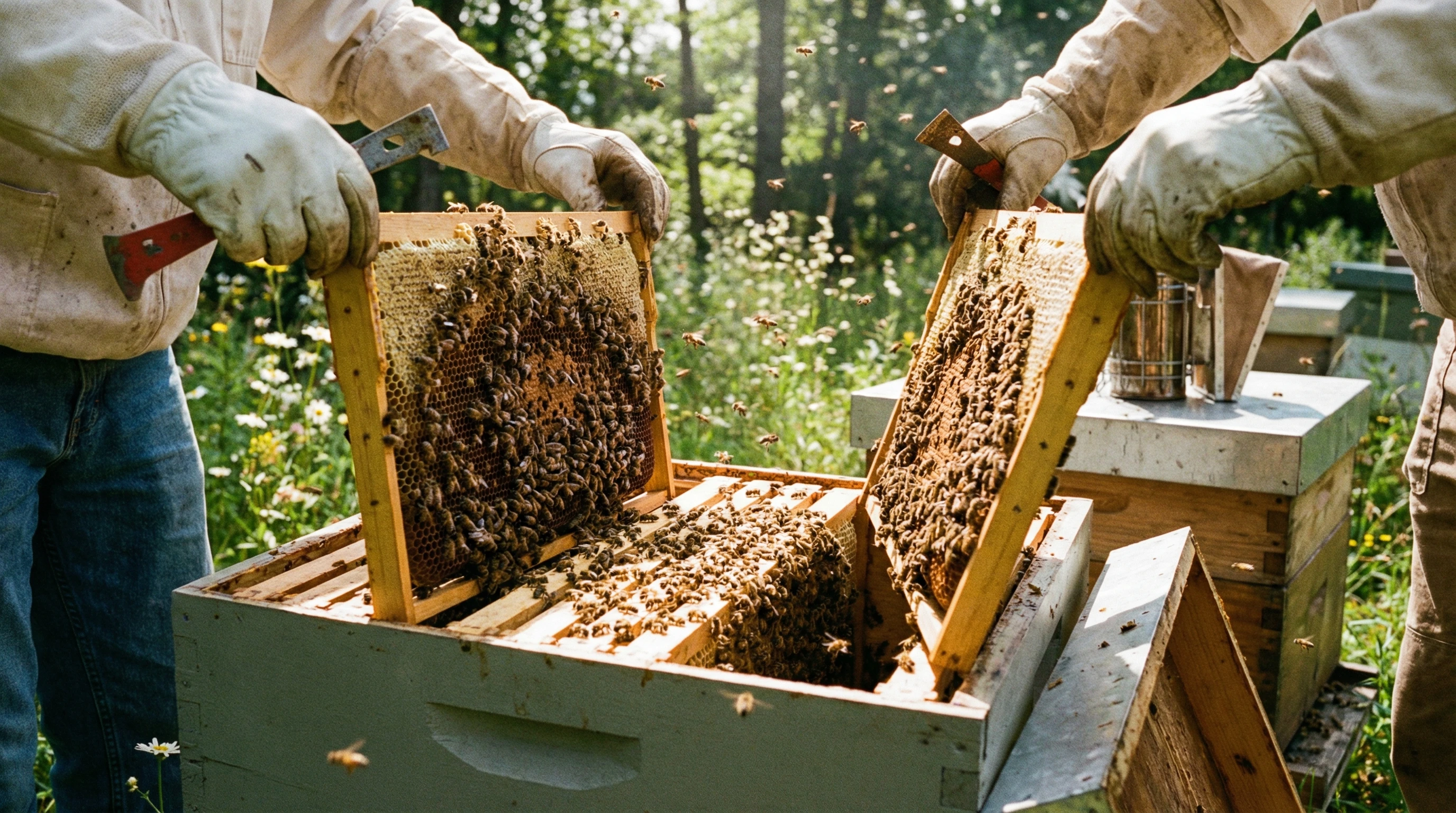
Splitting Beehives: Your FAQ Guide
If you’ve got questions about splitting beehives, you’re not alone. This process comes up a lot among beekeepers, whether you’re just getting started or you’ve been managing hives for years. Here I’ll walk you through the ins and outs, the why and how, plus some helpful tips along the way. If you still have questions after reading, feel free to reach out to your local beekeeping association—they’re usually pretty happy to help!
Beehive Splitting Basics
What does it mean to split a beehive?
Splitting a beehive is when I take one strong, healthy colony and divide it into two (or sometimes more) smaller colonies. It’s a bit like propagating a plant; sharing resources so both parts can thrive and grow into their own vibrant hives. With patience and attention, each split can become a successful colony.
Why do beekeepers split hives?
Splitting hives helps prevent swarming, where bees leave to find a new home. It’s also useful for managing hive populations, making more hives for your apiary, and even replacing older or failing queens. I’ve found that splits can really help keep my bees healthier and more productive. Plus, splits also let beekeepers switch things up in their operation, expand their apiary, or recover from losses.
When’s the best time to split a hive?
Early spring to early summer is peak splitting season in most places. That gives bees a good chance to build up their new home and store enough resources before winter comes. You want to see plenty of brood, food stores, and healthy workers before attempting a split. In some areas, a mild fall might allow for a later split, but timing is crucial for success. Be sure to check local guidance for your specific climate’s beekeeping calendar.
How Splitting Works
How do I know if my hive is ready to split?
I check for several signs before splitting a hive: lots of capped brood, strong numbers, plenty of food, and the presence of young larvae. If my bees seem overcrowded or they’re starting queen cells, that’s another signal it’s probably time. Check the edges of frames for visible queen cells or cups, which show the colony’s mood to expand or swarm.
What equipment do I need to split a hive?
You’ll need at least one extra hive setup—boxes, frames, bottom board, and lid. I’ve also had good luck with a bee brush and a gentle smoker to help keep things calm. Don’t forget protective clothing, especially if your bees get cranky during the process! Having a hive tool handy makes it easy to separate frames, scrape off excess wax, or nudge stubborn components apart. Some beekeepers use feeder tools or frame grips for a smoother process.
What are the basic steps to splitting a beehive?
The main parts of a typical split go like this:
- Find the queen. I try to spot her first since it helps with planning and reduces mishaps.
- Move half the brood, some bees, food, and (if you want) the queen to the new hive body. Be sure to keep an eye out for young nurse bees, as they adapt best to a new colony.
- If the new split doesn’t get the queen, I check for eggs or very young larvae so they can raise a new queen. This step ensures both hives remain viable.
- Reassemble both hives, reducing entrances if necessary. This deters robbing and helps the splits defend themselves.
These are the basics, but there are a few variations. Some beekeepers use a “walk away split,” letting bees raise their own queen, while others prefer to introduce a purchased queen to the new hive section, fast-tracking its development. You can also adjust the amount of brood and resources moved to balance strength between both splits, depending on your goals.
What to Expect After Splitting
How long does it take for a new queen to appear?
If the split is queenless and you didn’t introduce a new queen, your bees usually start building queen cells right away. The whole process from egg to queen takes around 16 days. Add another week or so after that for her to go on her mating flights and start laying eggs. During this waiting period, it’s normal to see the hive slightly less busy as the bees focus on raising their new leader.
Should I feed the split colony?
I typically give the new split sugar syrup and sometimes a pollen substitute for a few weeks, especially if natural nectar is scarce. It really gives them a boost to get off to a strong start. Consistent feeding helps the new colony draw out fresh comb and kickstart brood production, which is crucial in the early days of establishment.
Will splitting a hive affect honey production?
In the short term, yes. Each colony starts a bit smaller, so they might not make as much excess honey right away. But in the long run, stronger, well-managed hives are better for bees and beekeepers alike. If you’re mainly after honey, timing and planning splits in early spring usually gives the bees enough recovery time for summer flow. Managing splits smartly means you could enjoy bigger yields in the following seasons.
Troubleshooting & Tips
What if both splits end up queenless?
This can happen, even to experienced beekeepers. If neither split shows signs of a queen (no eggs or brood after three weeks), I introduce a mated queen or combine the split back to the original hive. Checking for eggs around two weeks after splitting keeps surprises to a minimum. When reuniting splits, make sure to use the newspaper method or similar tricks to avoid fighting between merged colonies.
Can I split a weak or small hive?
I always wait until a colony is strong enough. Splitting a hive that’s weak usually leaves both parts struggling. It’s worth building them up first; plenty of food, brood, and bees make splits more successful. Sometimes, adding extra resources to a lagging colony in advance can prep it for a later split.
When can I check on my split?
Most folks (myself included) recommend waiting about a week before bothering the new split. Too much disturbance can stress the bees or disrupt queen cell construction. A gentle check after the first week helps me see if they’re making a new queen, and I look for eggs again after another week. Take care not to shake or jar frames unnecessarily—smooth, patient inspections keep the hive relaxed and productive.
Still Got Questions?
If you’re puzzling over a situation I haven’t covered or want advice that’s specific to your climate or bee breed, local clubs or experienced beekeepers are a great next step. For extra reading, check reliable sources like the Honey Bee Society educational guides or the PennState Extension for details and step-by-step photos. Splitting hives is a learning adventure, and with practice, it gets smoother every year! The more you work with your bees and share stories with others, the more confident you’ll become handling hive splits and all the surprises they bring.
Splitting beehives is a smart, proactive way to prevent swarming and grow your apiary. It takes some planning, but it helps keep colonies strong and healthy. Overall, it’s a great technique for sustainable beekeeping.
Overall, I believe splitting is not only a smart beekeeping technique, but it’s one of the best ways to support healthy, sustainable bee populations.
What method do you prefer for splitting walk-away splits or introducing a mated queen?
Hi Monica!
Thank you for such a thoughtful reflection, you’re absolutely right that splitting is both preventive and regenerative for the apiary. I tend to choose the method based on timing and goals: walk-away splits work beautifully during strong nectar flows when colonies are bursting with young bees and resources. Introducing a mated queen is my go-to when I want faster buildup or more predictability, especially later in the season. Both approaches support sustainability; it’s really about matching the method to the hive’s strength and the season.
/Mats